
Large Dairy Farm: A Steam Grain Flaking Line for Its Own Feed
Complete equipment · Steam grain flaking mills (3 / 5 / 10 t/h)
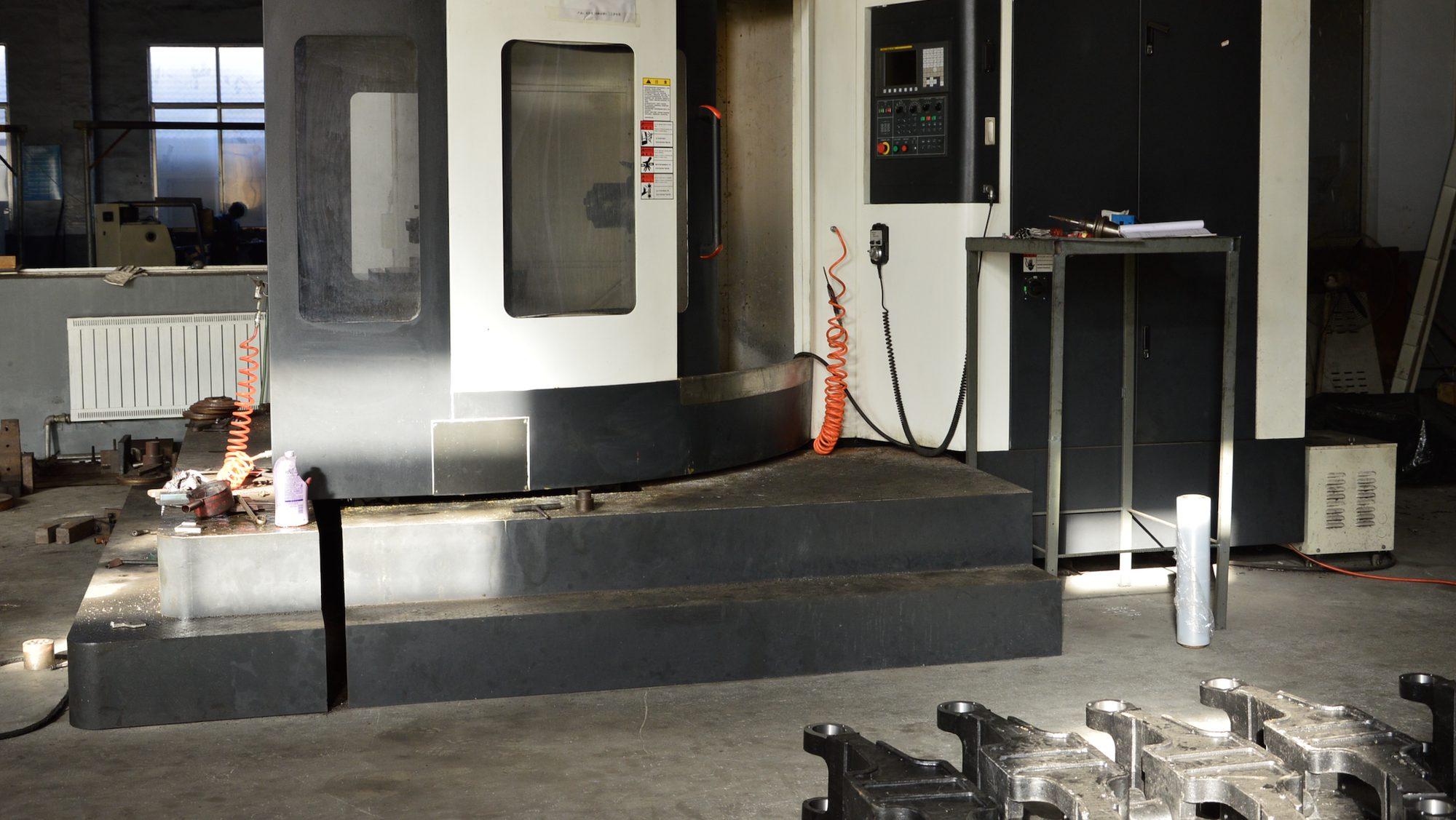
This case shows complete equipment supply, installation, commissioning and process guidance, core parts machined at SourceTide’s own manufacturing base, and continued supply of wear parts.
Case at a Glance
| Field | Case information |
|---|---|
| Business line | Complete equipment |
| Customer | A large dairy farm with about 3,000 cows, using about 12 tonnes of flaked maize a day |
| Requirement | Its own feed processing in place of bought-in flaked maize |
| Equipment | A fully automatic 5 t/h (about 120 t/day) steam maize flaking line |
| SourceTide’s role | Equipment supply, installation and commissioning, process guidance, and wear parts afterwards |
| Result | Starch gelatinisation usually 60–70%; flakes down to 1.2–1.5 mm; continuous, automated production |
The Customer
A large dairy farm with about 3,000 cows, needing about 12 tonnes of flaked maize a day. For years it bought steam-flaked maize ready-made, and at times fed conventionally ground maize directly.
The Problem
High overall purchasing cost. Bought-in flakes are bulky and costly to transport, and their price follows the grain market, so feed cost was hard to control.
Uneven quality. Gelatinisation varied from batch to batch in the bought-in flakes, which affected milk yield and the stability of milk composition.
Storage losses. Flakes absorb moisture readily, so flakes stored for long periods regained moisture and caked.
Limited feed efficiency. Grinding does not gelatinise the starch, which then breaks down too quickly in the rumen, limiting feed conversion.
Our Approach
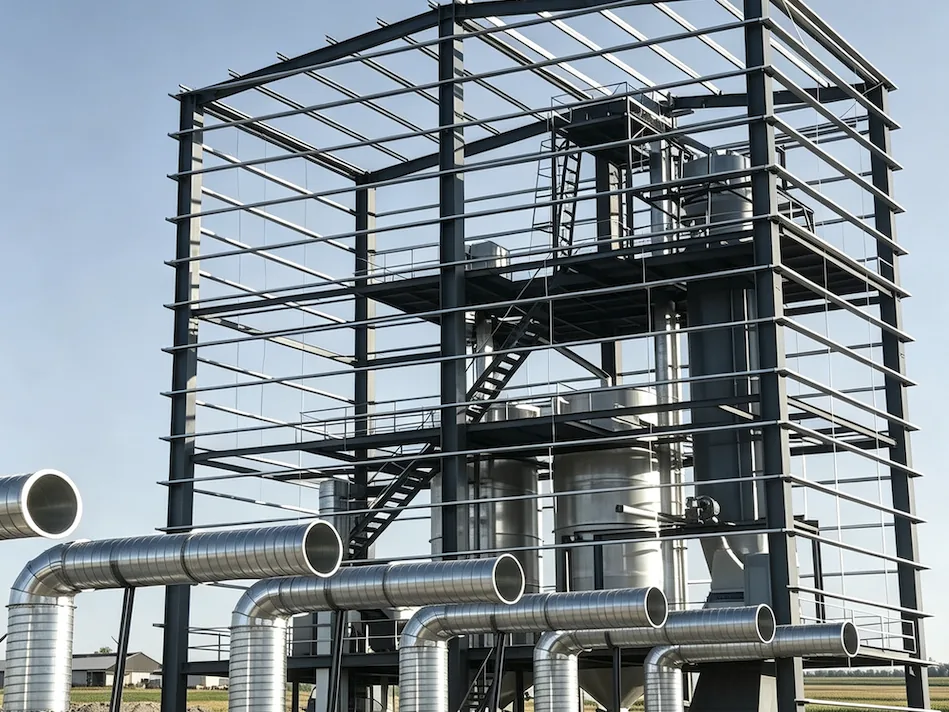
Sized to the farm. From the farm’s annual consumption, its site and its plans to grow the herd, we configured a fully automatic 5 t/h (about 120 t/day) steam maize flaking line, with conditioning, flaking, drying and cooling, and dust-removal and conveying units.
Why 5 t/h rather than 3 t/h. The line runs continuously, so it covers the farm’s daily use with capacity to spare: room for a larger herd, and for flaking grain for neighbouring farms. A 3 t/h line, closer to current use, costs less but leaves little margin; the customer chose 5 t/h with its expansion plans in mind.
Supply and support. SourceTide supplied the equipment, installation and commissioning, and process guidance. Core rotating parts are machined on our own CNC lines, and wear parts can be supplied to the original drawings after start-up.
The series. The range covers 3, 5 and 10 t/h, about 72, 120 and 240 t/day. Maize is standard; soybean and other crops are made to order.
The Result
After start-up, starch gelatinisation usually runs at 60–70% and flakes can be as thin as 1.2–1.5 mm, both adjustable to the ration. Production is continuous and automated, batch differences have narrowed, and the farm now processes its own feed, relying less on bought-in flakes and losing less to moisture regain and caking in storage.
Supply Scope
The supply covers the main process equipment. The steam source and boiler, civil works and site facilities are arranged by the customer, and environmental and special-equipment approvals follow local rules and are handled by the customer.
Before configuration. Share the annual consumption, the site and any expansion plans, the steam supply and electrical power available, the electrical and documentation requirements of the destination for an export line, and the specification and evidence expected at acceptance.
What the Customer Reports
With gelatinisation and flake thickness set to the farm’s own ration, batch differences are smaller than with bought-in flakes.
Grain is processed more evenly and the flakes look more consistent, so less is wasted in feeding.
Processing on demand means less feed in storage, with less moisture regain and caking.
The equipment runs steadily, and routine maintenance and wear-part replacement stay manageable.
How the Line Works
Steam flaking is an established process in ruminant feed. Grain is conditioned with steam and rolled into flakes, which gelatinises the starch and changes how it breaks down in the rumen.
| Stage | What happens | Why it matters |
|---|---|---|
| 1. Intake | Grain received and stored | Maize as standard; soybean on request |
| 2. Elevating | Vertical conveying | A continuous flow of material |
| 3. Cleaning | Impurities removed | Protects grain quality |
| 4. Soaking | Moisture adjusted | Swells and softens the grain |
| 5. Steam conditioning | Steam heat treatment in the conditioner | Gelatinises the starch and lowers harmful microorganisms |
| 6. Flaking | Pressed between rolls | Flakes of the specified density |
| 7. Drying | Flakes dried | A stable product for storage |
| 8. Cooling | Flakes cooled | Prevents condensation and spoilage |
Each stage is controlled digitally, which helps keep flake thickness even and gelatinisation stable.
Models and Capacity
| Model | Hourly capacity | Daily capacity (continuous) | Suggested site area | Grain | Typical use |
|---|---|---|---|---|---|
| 3T | 3 t/h | About 72 t | 10 × 45 m (450 m²) | Maize | Medium-sized farms mixing their own feed |
| 5T | 5 t/h | About 120 t | 13 × 52 m (676 m²) | Maize | Large feed mills and large farms |
| 10T | 10 t/h | About 240 t | 15 × 60 m (900 m²) | Maize | Industrial continuous lines |
Maize is the standard grain; soybean and other crops are made to order, with soybean conditioning equipment. Capacities between 3 and 10 t/h are made to order. The areas are minimum machine-area estimates for the complete line; the actual site is assessed against the local layout, material flow and auxiliary equipment.
Reference Ranges for Steam Flaking
Gelatinisation and flake thickness are this product line’s application data. The other figures are industry reference ranges, not results of this project; they vary, and do not appear equally under all conditions.
| Indicator | Reference range |
|---|---|
| Starch gelatinisation | Usually 60–70% (this product line; adjustable to the ration) |
| Flake thickness | Down to 1.2–1.5 mm (this product line; adjustable to the ration) |
| Total-tract starch digestibility | About 5–8 percentage points higher than dry rolling or grinding (industry reference) |
| Feed conversion | About 5–10% better (industry reference) |
| Milk yield | About 3–8% higher (industry reference; varies widely with inclusion rate and ration) |
| Milk protein | About 0.05–0.15 percentage points higher (industry reference) |
| Dry matter intake | About the same, or slightly lower (results vary) |
| Manure and emissions | Trending lower, as more nitrogen and phosphorus is digested |
| Harmful microorganisms on the grain | Trending lower, a side effect of steam heat treatment |
| Processing method | Starch gelatinisation | Total-tract starch digestibility (relative) |
|---|---|---|
| Steam flaking (moist-heat conditioning and roll flaking) | Higher | Higher: about 5–8 percentage points above dry rolling or grinding; suits large-scale dry storage |
| High-moisture storage (ensiled) | Largely independent of gelatinisation | Higher, through fermentation in wet storage; demanding storage and formulation management |
| Dry rolling | Slight | Medium: mechanical breakage only |
| Fine grinding | Practically none | Similar to dry rolling or slightly higher; fast rumen breakdown, a higher acidosis risk when the share of fines is high, and milk fat easily affected |
Actual results depend on grain quality, animal type, inclusion rate and herd management. The operating figures above come from a line in production; the benefit directions are industry references, not a commitment to specific weight gain, milk yield or cost savings. On-site measurement and third-party assessment are the guide to rely on.
Applications
| Livestock | Typical use |
|---|---|
| Dairy cattle | Steam-flaked maize, which helps raise milk yield and milk protein |
| Beef cattle | Helps raise starch digestibility and weight gain |
| Sheep | Helps nutrient absorption and reduces feed waste |
| Pigs | Steam-flaked grain, assessed for suitability on request |
Where the Value Comes From
The value of a farm’s own flaking line depends mainly on where its maize came from before. Where the farm bought ready-made flakes, the value lies in purchasing; where it fed ground or dry-rolled maize, the value lies in feeding. Most farms do some of both.
| Source of value | How it arises |
|---|---|
| Purchasing | Instead of paying a premium for ready-made flakes over raw grain, the farm carries its own line’s energy, labour and maintenance costs; the difference is the purchasing value, usually the main part for farms that bought flakes long-term |
| Feeding | Gelatinised starch is digested more completely, so more of the same weight of maize is absorbed instead of being lost in manure; the change is small if the farm already fed flaked maize |
| Other changes | Gelatinisation and thickness set to the farm’s own ration with smaller batch differences; processing on demand with less stored feed, moisture regain and caking; less spent transporting bulky flakes; spare capacity for flaking grain for neighbouring farms |
The actual amounts depend on daily throughput, the delivered maize price, local energy and labour costs and how the equipment is depreciated, and they differ widely by region, so this case gives no calculated figures. To estimate your own, share your daily use and local prices.
Reference Projects
The product line has been deployed in several provinces in China and in overseas markets, from small and medium lines to large industrial projects. Completed projects include 5T standard medium configurations of about 120 t/day and 10T large installations of about 240 t/day; one 5T project includes soybean conditioning equipment.
These references show configuration types only, not customers’ operating data; the content of each cooperation follows the agreement between the parties.
Discuss a Similar Requirement
Share your herd size, daily maize use, site and local conditions, and we will suggest a configuration.